

Kenya Charts a New Course for Blue Carbon Ecosystems
-
Coastal resilience
-
Coastal wetland conservation
-
Vibrant Coasts and Deltas
-
Blue Carbon Ecosystems
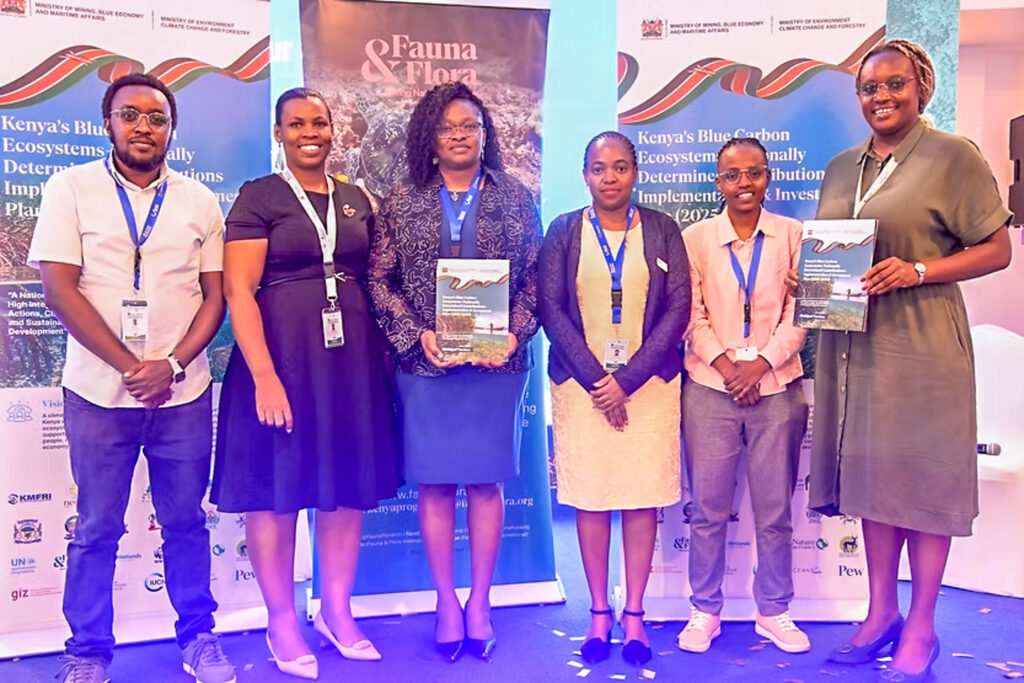
Mangroves and seagrass meadows are among Kenya’s most valuable natural assets. They store vast amounts of carbon, protect coastlines from erosion, support fisheries, conserve biodiversity, and sustain the livelihoods of thousands of coastal households. Yet these ecosystems continue to face growing pressure from climate change, unsustainable resource use, and pollution.
To address these challenges, Kenya has launched the Blue Carbon Ecosystems Nationally Determined Contributions (NDC) Implementation and Investment Plan (2025–2035), providing the country’s first national roadmap for protecting, restoring, and investing in blue carbon ecosystems. Unveiled during the 11th Our Ocean Conference in Mombasa, the plan positions mangroves, seagrass meadows, and other coastal wetlands at the center of Kenya’s climate action and sustainable blue economy agenda.
Developed through a multi-agency Technical Working Group led by the Ministry of Environment, Climate Change and Forestry and the Ministry of Mining, Blue Economy and Maritime Affairs, the Plan reflects a collaborative effort involving government institutions, county governments, research organisations, development partners, civil society organisations and coastal communities.
Wetlands International Eastern Africa contributed to the development of the plan as part of the National Technical Working Group, bringing its experience in wetland restoration, community engagement, and nature-based solutions to support the design of a framework that balances environmental conservation with sustainable development.
The plan translates Kenya’s climate commitments into practical action. It outlines a coordinated approach to restoring degraded mangrove forests, protecting seagrass ecosystems, strengthening governance, improving monitoring systems, and mobilising investment to scale conservation efforts over the next decade. It also recognises that healthy coastal ecosystems are fundamental to resilient livelihoods, supporting fisheries, tourism, climate resilience, and local economies.
Among its key targets, the Plan seeks to restore at least 75 per cent of degraded mangrove ecosystems, strengthen the protection of seagrass meadows and mobilise approximately KES 80.1 billion (USD 620 million) in investment by 2035. It also aims to create up to 70,000 jobs through sustainable blue economy enterprises, demonstrating that investing in nature can deliver lasting social, environmental and economic benefits.
For Wetlands International Eastern Africa, the launch represents an important milestone in advancing nature-based solutions across Kenya’s coast. For many years, the organisation has worked alongside governments, communities and partners to restore wetlands, strengthen governance and promote community-led conservation. The new Plan builds on these efforts by providing a national framework that aligns policy, science and investment behind a shared vision for Kenya’s blue carbon ecosystems.
The success of the Plan will depend on sustained collaboration. As implementation begins, Wetlands International Eastern Africa will continue working with government, coastal communities, and conservation partners to strengthen community stewardship, support ecosystem restoration, and ensure that Kenya’s blue carbon ecosystems continue to deliver benefits for both people and nature.
Key highlights of the Plan
- Provides Kenya’s first national implementation and investment framework for blue carbon ecosystems.
- Integrates blue carbon into Kenya’s Nationally Determined Contributions (NDCs) through 2035.
- Targets the restoration of at least 75% of degraded mangrove ecosystems.
- Strengthens protection and sustainable management of seagrass ecosystems.
- Mobilises approximately KES 80.1 billion (USD 620 million) to support implementation over the next decade.
- Promotes community stewardship, sustainable livelihoods, and investment in the blue economy.