
Our History
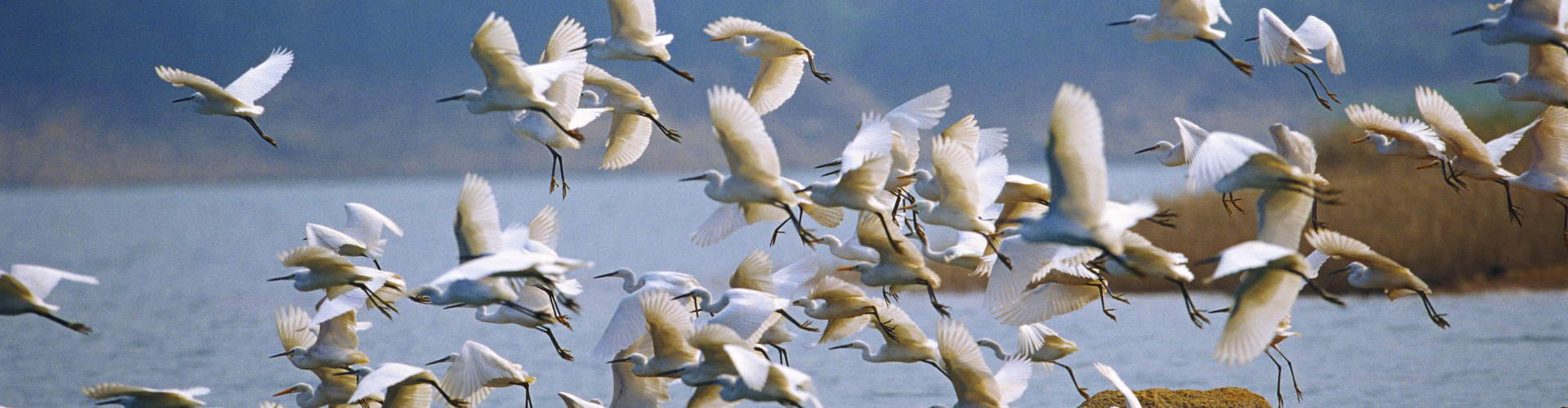
Wetlands International and its predecessors have worked to protect wetlands since 1937. Back then, we were known as the International Wildfowl Inquiry. Our work began as part of the British Section of the International Committee of Bird Preservation with a focus on protecting waterbirds.
In 1954, our name became International Waterfowl & Wetlands Research Bureau (IWRB) and our scope expanded to include the protection of wetland areas. We were based at the Museum of Natural History in London, followed by the Tour du Valat in the Camargue (France) until 1968, and then the Wildfowl Trust in Slimbridge (UK) until 1995.
Organisations with similar objectives emerged in Asia and the Americas: the Asian Wetland Bureau (AWB) was initiated as INTERWADER in 1983, and Wetlands for the Americas (WA) formed in 1989. These three organisations started to work closely together in 1991.
This working relationship evolved into a single global organisation which adopted the name Wetlands International and established its headquarters in the Netherlands in 1996.
Wetlands International Eastern Africa is part of the global Wetlands International network, working to safeguard and restore wetlands for people and nature. It covers countries in the Eastern Africa Sub-region with established offices in Kenya, Ethiopia, Uganda and Tanzania. In Eastern Africa, operations in Kenya begun in 2008 and the office was registered in 2011. In 2017, the Global Office designated this office as the regional hub for the Eastern Africa region. Between 2013 and 2017, Wetlands International Eastern Africa started work in Ethiopia, Tanzania and Uganda. In 2016, a project office in Uganda was opened. This was followed by the registration of legal entities in Ethiopia in 2019 and Tanzania in 2021. Field offices have also been established in Lamu and Lodwar (Kenya), Central Rift Valley (Ethiopia) and Nyamisati (Tanzania).