
From Theory to Practice: Nature-Based Solutions for a Resilient Africa
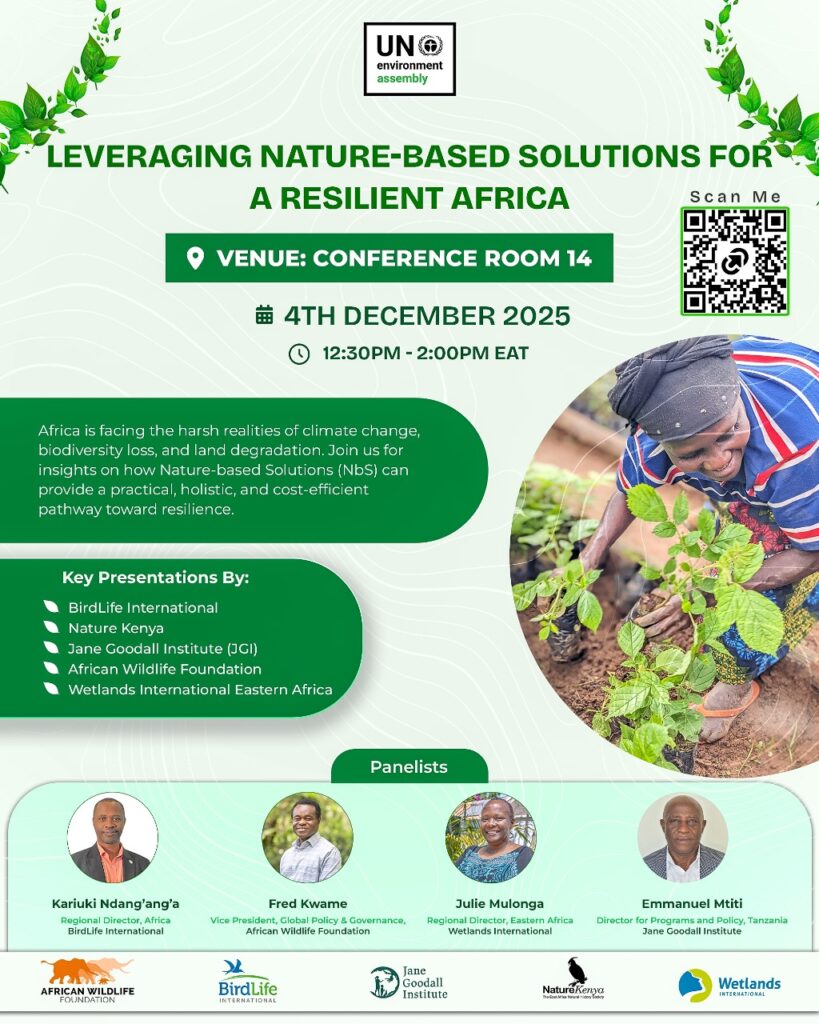
UNEA 7 Side Event | 4 December 2025
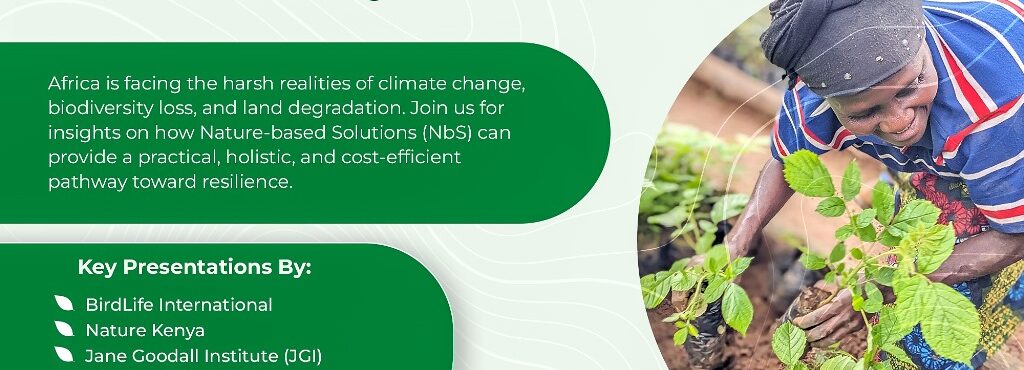
Africa is facing intensifying climate impacts, biodiversity loss and land degradation, yet across the continent there are powerful examples of communities and ecosystems rebounding through the use of Nature-based Solutions. These solutions are already transforming landscapes, restoring livelihoods and strengthening resilience. At UNEA 7, Wetlands International Eastern Africa will join BirdLife International, Nature Kenya, the African Wildlife Foundation and the Jane Goodall Institute for a dedicated event exploring how these solutions move from concept to implementation, and what it will take to scale them effectively across Africa.
The event offers participants a clear view of how NbS are being applied in different contexts, the lessons emerging from the field and the opportunities for stronger collaboration. The programme has been designed to provide both depth and practical insights through a combination of presentations, technical reflections and open dialogue.
The session will open with an overview of the regional context for ecological mangrove and wetland restoration. This introduction will outline emerging trends, the pressures facing coastal and freshwater ecosystems and the growing need for evidence-based restoration practices. It will set the stage for a shared understanding of why coordinated action is crucial for the Western Indian Ocean region and beyond.
Participants will then move into a series of field insights drawn from Kenya, the Philippines, Indonesia and Guinea Bissau. These case presentations will offer a realistic picture of how restoration is being implemented on the ground, highlighting the role of communities, local institutions and technical experts. Presenters will describe what ecological success looks like in different landscapes, the adaptive methods being used and how ecological gains support both nature and livelihoods.
Following these presentations, the programme shifts to a segment highlighting the technologies advancing restoration work. This portion of the event will introduce tools such as remote sensing, geospatial mapping and digital monitoring platforms, showing how they improve planning, tracking and community participation. The segment illustrates how combining scientific tools with local knowledge strengthens long-term outcomes.
A central component of the event is the expert panel discussion. This conversation brings together respected leaders who represent different parts of the conservation and policy landscape. Panelists include Kariuki Ndang’ang’a from BirdLife International, Fred Kwame from the African Wildlife Foundation and Julie Mulonga from Wetlands International Eastern Africa. The discussion will be moderated by Ken Mwathe from BirdLife International and Harifidy Ralison from the African Wildlife Foundation. Together, they will examine what effective restoration models look like, the realities of financing and governance, and how countries can strengthen cross-border learning. Participants will have an opportunity to engage with panelists during the Q&A segment.
The programme also includes a spotlight on community leadership. This segment shares experiences from women, youth and community champions who are driving restoration activities every day. Their reflections offer honest insight into the challenges they navigate, the solutions they create and the pride they take in restoring their environments. This part of the event reinforces the essential role of community ownership in sustaining long-term ecological gains.
Participants will also be introduced to Kenya’s ecological restoration demonstration sites, which serve as effective centres for learning and replication. This session will highlight what makes these sites successful, the technical and social elements behind their design and the ecological changes observed so far. It will also explore how demonstration sites can support other countries seeking to strengthen their restoration strategies.
The event will conclude with a collective reflection on collaboration and next steps. This closing segment will summarise the insights shared throughout the programme and point to opportunities for strengthening regional partnerships, building technical capacity and supporting long-term resilience through NbS. Participants will leave with a clear picture of where momentum is building and how coordinated action can accelerate restoration work across the Western Indian Ocean region.
The event will take place on 4 December 2025 from 12:30 pm to 2:00 pm in Conference Room 14. All interested participants, partners and stakeholders are warmly invited to join this timely and important conversation on advancing Nature-based Solutions for a more resilient Africa.