
Inverting the Triangle: Why Local Care is the Key to Water Peace and Security
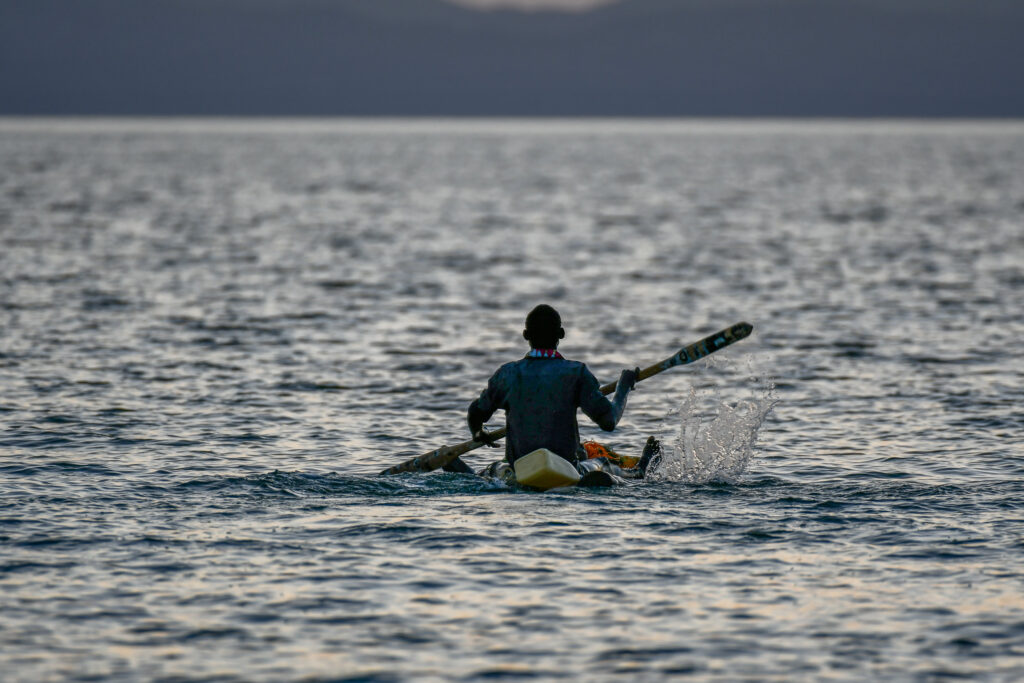
The whispers of conflict often begin where the water runs dry. In a world strained by climate change and competing demands for resources, water remains both a source of life and a potential spark for division. This was the defining message of the International Conference on Water, Peace and Security (WPS), held in Nairobi on 27 and 28 October 2025.
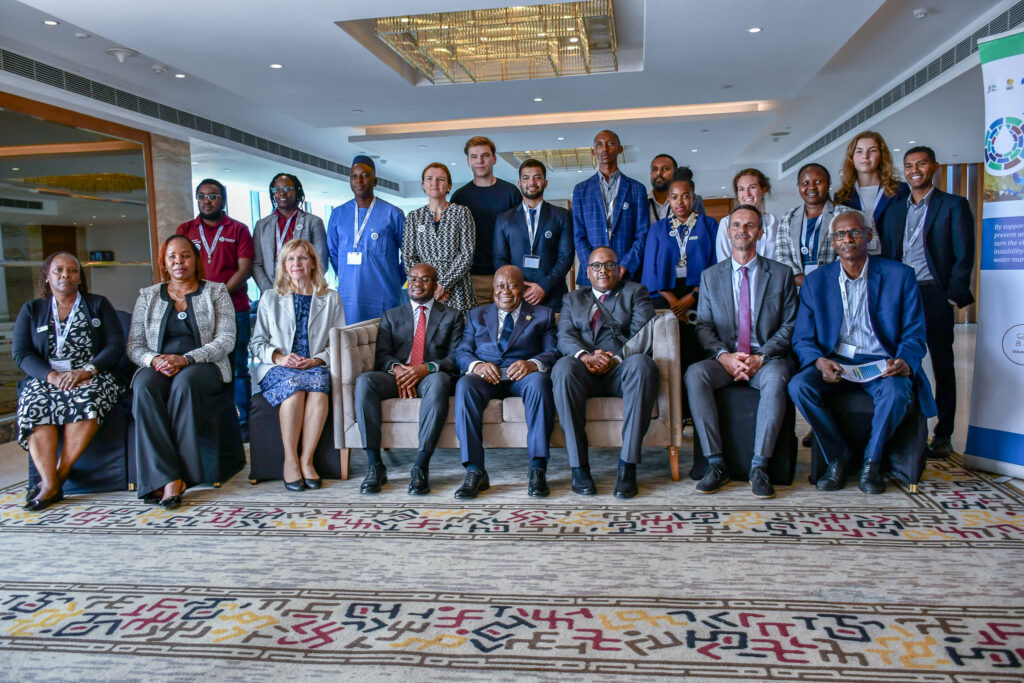
Bringing together voices from across 35 countries, the conference was more than a policy dialogue. It became a space where difficult truths were faced and collaboration was reimagined. As Ambassador Fred Gateretse-Ngoga of the African Union said, “Show me a dispute, and I will show you a natural resource.”
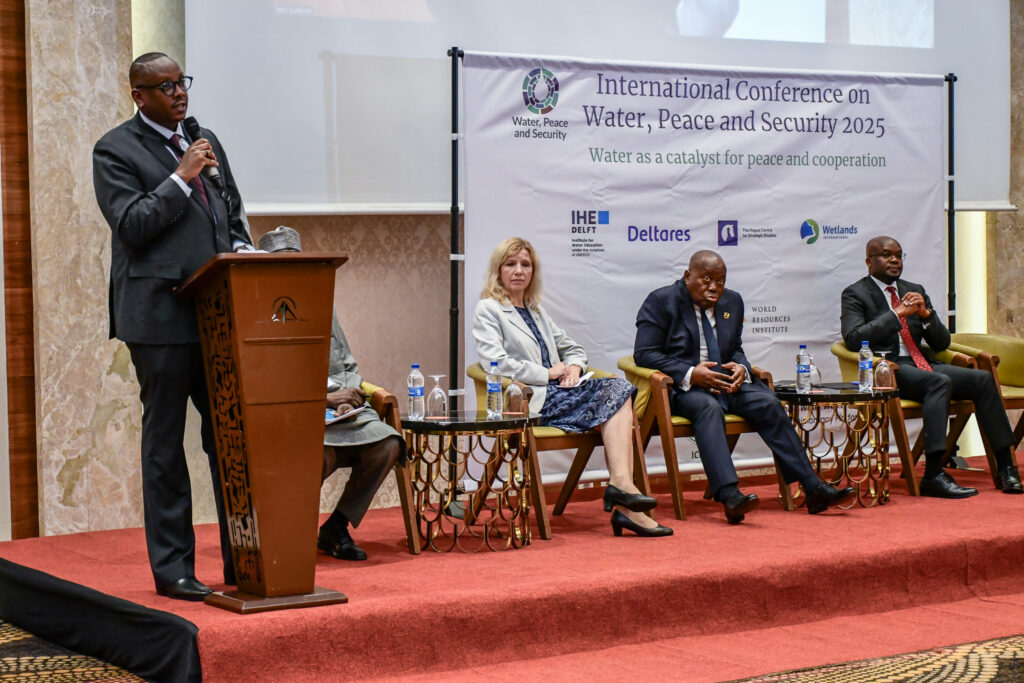
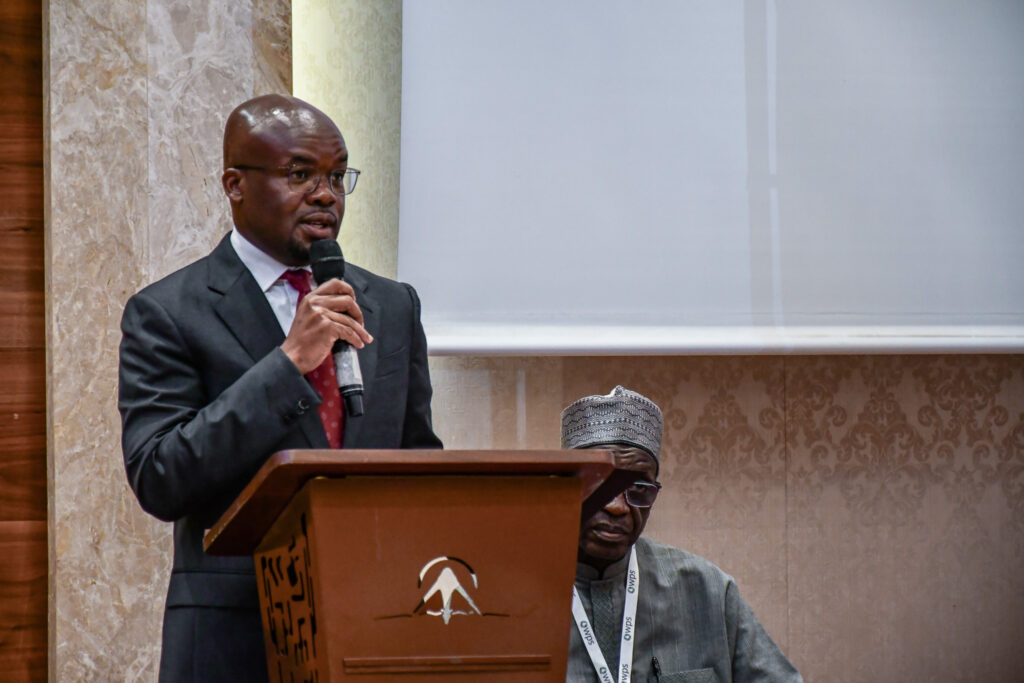
Kenya’s Principal Secretary for Interior, Dr. Raymond Omollo, reminded participants that water security is human security. He reaffirmed Kenya’s commitment to sustainable water governance and urged stakeholders to put communities at the heart of climate and peacebuilding efforts, noting that “we must work together to protect our natural resources, restore degraded landscapes and ensure that communities at the heart of these ecosystems thrive.”
Wetlands International, a core partner in the WPS Partnership, anchored the discussions with a case study from the Tana River Basin. Using GIS technology to map water-related conflicts in Turkana and Marsabit, the organisation demonstrated that investing in ecosystems is investing in peace. Together with partners, Wetlands International convened the session Shared Waters, Shared Future, which explored the challenges of Kenya’s largest river system.
Community representative Moses Juma from the Tana Delta Conservation Network captured the local reality, saying, “Flooding is not a problem to us as a community; it keeps the Delta alive. But untimely and uncontrolled water release is the biggest problem.”
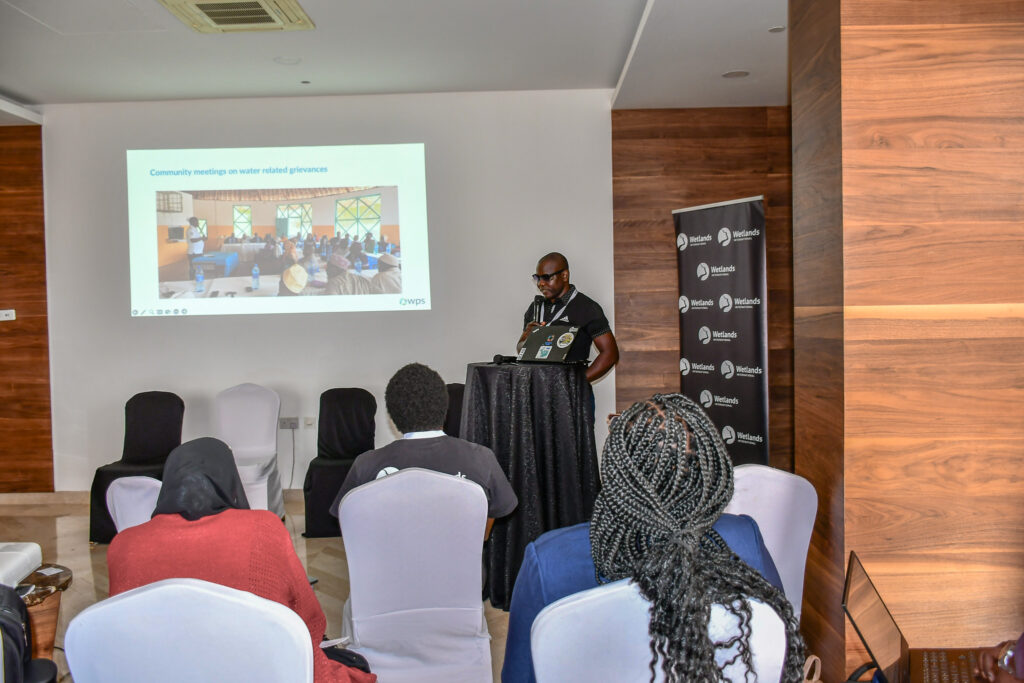
From that discussion came a major breakthrough: a proposed Inter-County Water Protocol developed with the counties of Tana River and Lamu. The framework ensures equitable access and sustainable management across all nine basin counties while calling for the formal recognition of the Rights of Wetlands. As Lamu County’s Deputy Director, Anthony Mbuthia, affirmed, “The water protocol is a milestone towards equitable and sustainable management of the Tana River Basin.”
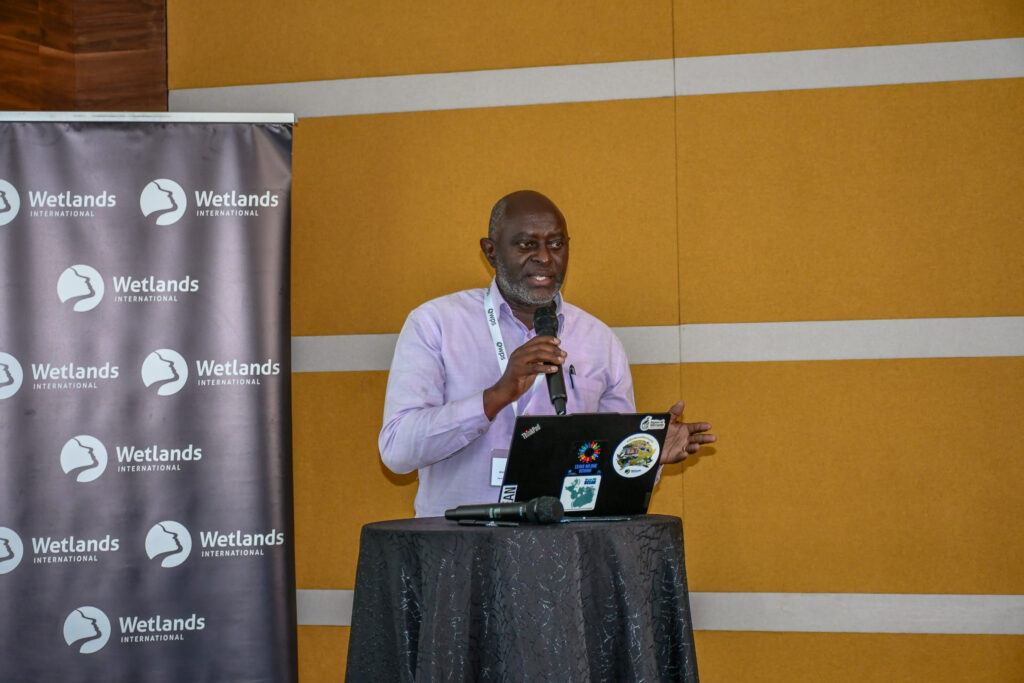
The protocol also sets a tangible target by maintaining a minimum ecological flow of 60 cubic metres per second at Garissa to sustain the Delta ecosystem. It represents a shift from crisis response to prevention and from top-down management to shared stewardship.
The most striking takeaway came from the closing high-level panel moderated by Professor Pieter van der Zaag. The call was to invert the triangle by putting local action at the centre of conflict prevention. Local institutions such as Water Resource Users Associations and Community Forestry Associations were recognised as the true guardians of peace, though often underfunded. Empowering them means empowering coexistence.
Former President of Ghana H.E. Nana Addo Dankwa Akufo-Addo brought the continental perspective to life. He described water insecurity as one of the greatest challenges of our generation but also a chance to demonstrate Africa’s resilience and unity. Reflecting on cooperation across shared basins, he said, “Africa’s water story is not only one of crisis; it is also a story of resilience and shared responsibility. Every drop of Africa’s water must become a drop of peace, justice and hope for generations to come.”

Participants also emphasised accountability in international partnerships. They urged development actors to apply the Do No Harm principle, be transparent about vested interests and ensure that investments do not deepen inequalities or fuel conflict.
There was strong consensus that Africa needs a dedicated Water Peace and Security Architecture to strengthen early warning, mediation and coordination across borders. Innovative financing, supported by national and local institutions, was recognised as key to making these systems work.
The conference closed not with formality but with reflection. Yassir Mohnert, Manager of the WPS Partnership, celebrated the diversity and determination of participants. Professor van der Zaag left the room with a simple, resonant word: care.
Let’s care for our water resources, and let’s care for each other. If you care for something, then you value it. And there are few things more valuable than water.
The journey from scarce resource to shared future is not only about policy; it is about people. As one participant put it, “Life is peace, and peace is life.” From the spirit of Nairobi emerges a shared commitment to act, to care, to cooperate and to transform water from a source of conflict into a source of connection. Every river, every wetland and every drop holds the power to sustain peace if we choose to nurture it together.